
The 2026 Australian sultana season is currently in its crucial mid-growth phase and shows a positive outlook. Despite local weather volatility and below-average grape numbers, total volume is expected to remain stable compared to 2025. This stability is supported by two key factors: the maturation of new vineyards and significant investment in modern processing technologies to ensure product integrity.
Current field data shows a resilient season in which new cultivation areas are successfully compensating for natural yield fluctuations:
Income stability: The total volume of the industry is expected to reach the level of 2025, „all other things being equal.“.
Grape numbers vs. cultivation area: While the number of grapes per vine is lower this year, new vineyard developments that are now coming into full production are providing the necessary volume to ensure market supply.
Local weather events: At the beginning of the season, hailstorms were reported, but their effects proved to be very localized. The majority of the industry remained unaffected.
In order to meet rising global quality standards, APDF has invested in a second Tomra 5C laser scanner—the latest in top-of-the-line optical sorting technology.
Commissioning in 2026: This second facility will be fully operational before the start of the 2026 harvest and will double the factory's state-of-the-art scanning capacity.
Precision sorting: The Tomra 5C uses high-resolution lasers and Biometric Signature Identification (BSI+) to detect even the smallest defects (stems, foreign material, or color deviations).
Quality assurance: This ensures that, with stable volumes, the quality and purity of the final product reach historic highs—protecting the reputation of Australian sultanas in premium export markets.
At the same time, a strategic change is taking place in the immediate post-harvest treatment of the fruit:
Overcoming bottlenecks: More and more producers are investing in their own drying capacities in order to take on this task themselves and for other producers.
Integrity first: Decentralizing the drying process allows the fruit to be processed more quickly after cutting. This preserves the integrity of the skin and color and reduces the risk of weather-related damage.
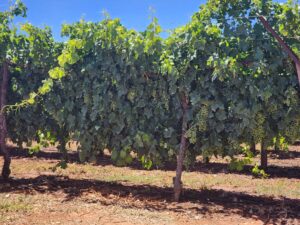
The outlook for 2026 is characterized by stable volumes and technological leadership. The industry is now entering the most critical window of time—the drying phase—with producers hoping to deliver quality on par with 2025 levels.
The combined investments at the operational and factory levels have a clear goal: to ensure that APDF remains at the forefront of the DVF (Dried Vine Fruit) industry in the years to come. By combining the natural advantages of Australian cultivation with first-class sorting technology, we continue to deliver the most reliable and highest quality sultanas in the world.
Download our white paper here for comprehensive information about sultanas and harvesting: Click here!
Interested in specifications, samples and/or prices?
Click here!

Key Account Manager Sales
 German German
  English
 French
 Polish